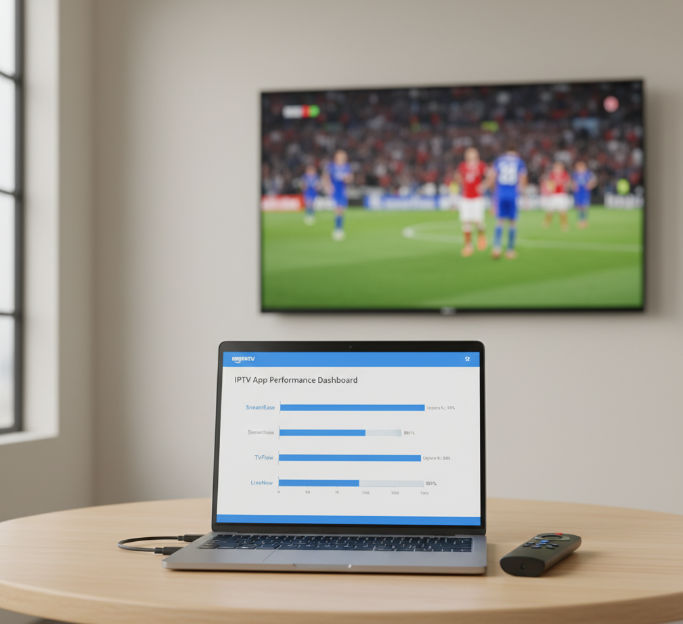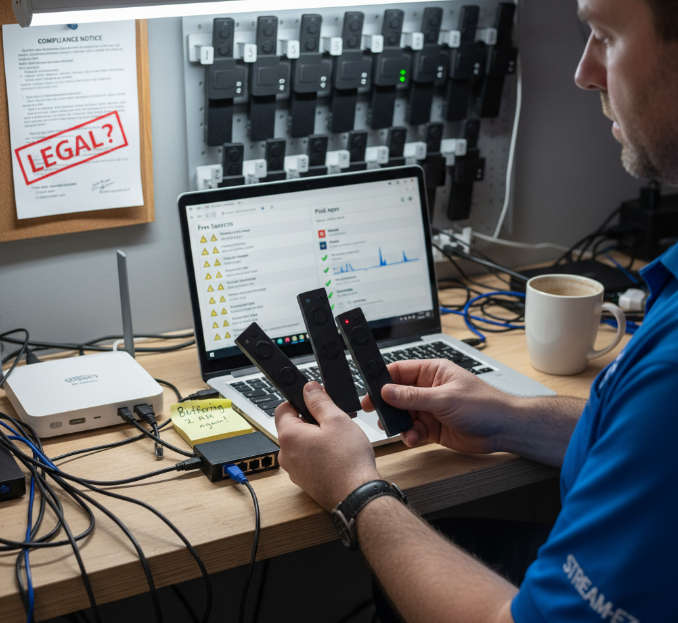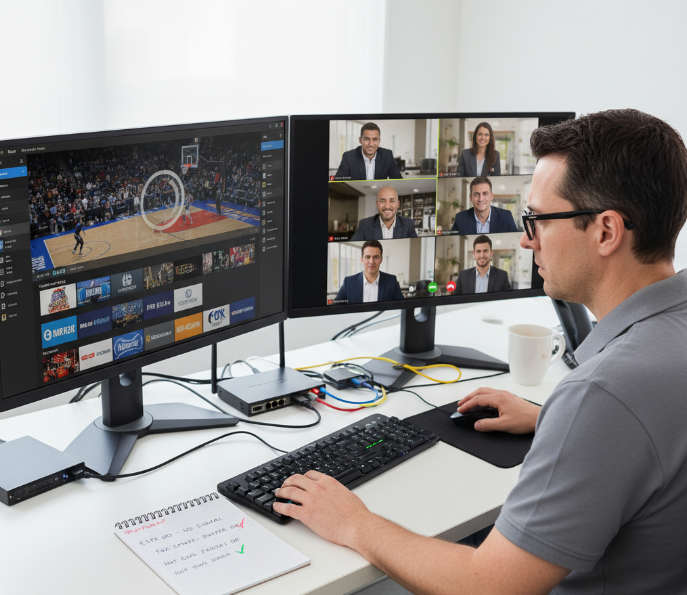
You know that gut-sinking moment when a big client says, “Your channels keep buffering”? That’s the kind of problem an iptv test in XBMC should catch long before the customer’s boss walks into the room and sees a frozen screen instead of live sports.
Picture a hotel group or bar chain on a demo call: your playlist looks great in the office, then turns into a hot mess on their network. At that point, price doesn’t matter—trust is gone. This guide is about giving you a clear, repeatable way to test channels in XBMC so you’re not crossing your fingers on every sales call.
“As our StarIptv engineering team likes to joke, ‘No test, no sale.’”
You’ll see what needs to be ready before any XBMC testing, how to load solid test playlists step by step, how different locations (home, café, office) change performance, and how to keep testing legal and safe.
Short story: you walk away with a simple XBMC playbook your sales, support, and resellers can all follow—same steps, same results, fewer lost deals.
Stop Buffering: Run an IPTV Test on XBMC
Diagnosing Jitter, Latency, and Packet Loss in IPTV Test
Messy playback usually comes from the network, not XBMC. Focus on three troublemakers: jitter, latency, and packet loss.
Ping key endpoints with ICMP to see baseline latency and packet delay.
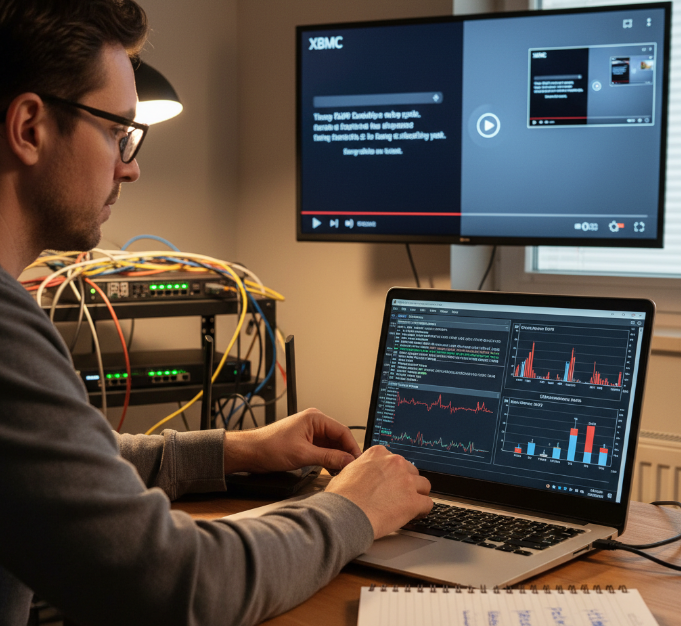
Use SNMP or simple graphs to spot jitter spikes and burst loss.
Treat packet loss like a bid price / ask price spread: the wider it gets, the worse your net profit in QoE for viewers.
When UDP Multicast Outperforms TCP Unicast for Channel Stability
For live channels, UDP multicast can feel way smoother than plain TCP unicast. Research on IPTV delivery shows multicast is typically more resource-efficient at scale than unicast, especially when many viewers watch the same channel. (blog.apnic.net)
Use IGMP to join multicast groups and push RTP over UDP into XBMC.
Keep TCP unicast for picky clients or low trading volume style trials.
Compare jitter and latency on both paths; if multicast holds up with less packet loss, that is your go-to mode for big hospitality networks.
Optimizing Router and Network Switch for High Bitrate Streams
Your router and network switch decide how happy high bitrate streams will be.
Mark IPTV traffic with QoS tags so it beats random background downloads.
Watch SNMP stats for packet loss, packet reordering, and bandwidth throttling.
Align port configs with headend encoder output and set-top box limits.
Short version: treat network depth like an order book, keeping enough room for every burst.
Tuning Buffer Ratio and Adaptive Bitrate Streaming Profiles
Dialing in buffer ratio and adaptive bitrate streaming is like tuning risk controls on a trading account. Adaptive bitrate streaming dynamically adjusts video quality based on available bandwidth, reducing buffering while maximizing quality. (cloudinary.com)
What Do You Need Before Any IPTV Testing?
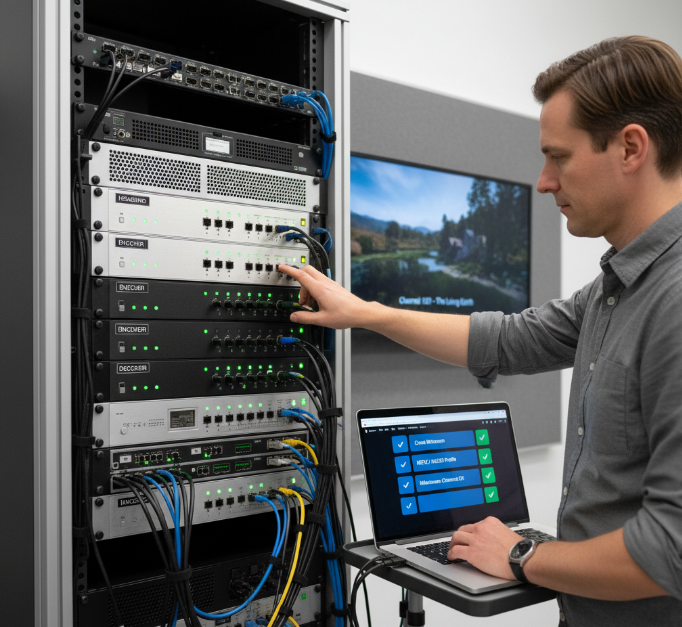
Headend, Encoder, and Decoder Readiness Checklist
Quick sanity list: Headend outputs clean Bitstream; Multiplexer isn’t choking; Middleware sees channels.
Check SDI ingest is stable, then confirm Transcoding profiles match HEVC / H.265.
Watch Latency end-to-end: SDI → encoder → mux → decoder.
If any link is sketchy, your XBMC test will look “bad” even when the network is fine.
Configuring IGMP and RTSP Across Core Network Segments
Put IPTV on its own VLAN across the Backbone.
Enable IGMP Snooping on switches and ensure an IGMP Querier exists. Best-practice guides for IPTV multicast recommend enabling snooping plus at least one querier per VLAN to avoid flooding multicast to all ports. (tp-link.com)
If routing Multicast, set up PIM correctly between segments.
Validate RTSP paths for your control plane and firewall rules.
Track Packet Loss during joins; a little loss can wreck live zapping.
StarIptv ops lead: “Bad querier placement is the silent Multicast killer.”
Baseline QoS, MOS, and Bitrate Targets for Wholesale IPTV
Wholesale buyers don’t want vibes—they want numbers that map to user gripes. Quality of Service targets should cover Jitter, Bandwidth, and Throughput, while Mean Opinion Score reflects how “watchable” it feels. MOS is widely used to summarize perceived video quality based on factors like startup delay and stalling events. (en.wikipedia.org)
Use CBR for steady channels, VBR for content with spikes, and set minimum Frame Rate expectations for sports. If your baselines are clear, partners stop arguing and start signing.
Set-top Box, OLT, and DSLAM Compatibility Planning
STB reality check: codec support, Firmware versions, and remote Provisioning flow.
Fiber side: confirm Optical Line Terminal settings and GPON profiles won’t throttle IPTV.
xDSL side: validate DSLAM configs and the Last Mile limits—especially on old Copper loops.
Field test like a buyer: one weak last-mile path can trash your “perfect lab” results fast.
Types of IPTV Test Channels and Sources
Live Multicast Channels Using RTP and UDP Transport
Live multicast testing is all about scale and stress.
Use IGMP and PIM to control joins and leaves cleanly.
Track Packet Loss and Jitter during fast channel zaps.
Verify each Stream Address under peak Network Bandwidth load.
Watch Latency closely. If it spikes, the MCAST setup usually needs tuning. This test shows buyers the system can handle hundreds of screens without choking.
On-Demand Catalogs with HLS, DASH, and Progressive Download
VOD tests feel closer to everyday streaming habits.
Load M3U8 or MPD via HTTP.
Check the Manifest File for clean Chunking.
Observe Adaptive Bitrate shifts as bandwidth changes.
A solid CDN keeps the Buffer calm even during jumps. Buyers like seeing smooth pauses, fast resumes, and no awkward quality drops.
MPEG-2 and H.264 Compared to HEVC, VP9, AV1, and VVC
Old codecs still work, but efficiency talks money.
MPEG-2 burns bandwidth. H.264 stays safe and familiar. Newer Video Compression options like HEVC, VP9, AV1, and VVC shine at 4K Resolution and HDR.
Testing highlights Bitrate Efficiency, Frame Rate stability, and device Decoding limits. Smart Transcoding plans help wholesalers pitch better quality at lower delivery costs.
Designing High-Margin QoE Test Feeds for Hospitality Partners
Hotels and bars care about feelings, not specs.
Blend strong Quality of Experience with smooth User Interface flow.
Tune Middleware for fast zapping.
Match streams to each Set-top Box model.
Back claims with Monitoring and Packet Capture.
Clear Service Level Agreement terms plus visible Reliability turn test feeds into premium contracts. That’s where margins quietly grow.
7 Steps to Add IPTV Test Playlists in XBMC
Collecting M3U and EPG URLs from Upstream Providers
Gather a valid M3U playlist from trusted Upstream providers. Official Kodi docs confirm that PVR IPTV Simple Client uses M3U playlists for live TV streams and XMLTV for EPG data. (kodi.wiki)
Match each EPG URL to the right Channel sources.
Keep Data collection tidy: label regions, codecs, and bitrates.
Clean lists avoid awkward demos where IPTV streams load but the Program guide looks broken. Buyers notice that stuff fast.
Verifying HTTP, TCP, and RTSP Endpoints Before Import
Check basic Network connectivity to the stream host.
Confirm HTTP protocol links return data.
Validate TCP connection stability under load.
Test RTSP streaming play and pause behavior.
This Pre-import check saves time. Endpoint verification upfront means fewer “blank screen” moments later during Stream validation.
Importing Playlists and Mapping Channels Inside XBMC
This step ties everything together. During Playlist import, align names, logos, and categories so buyers don’t feel lost. Smart Channel mapping inside XBMC configuration helps sales demos feel polished. A clean IPTV setup feeds the Media library, keeps the PVR client happy, and shows partners you run a tight ship.
Selecting HLS, DASH, or Multicast Streams per Use Case
HLS streaming
Smooth for mixed devices and mobile testing.
DASH protocol
Better control for Adaptive bitrate tuning.
Multicast streams
Perfect for hotels and ISPs chasing scale.
Smart Use case selection proves you understand Streaming technology and real-world Stream optimization, not just theory.
Measuring Startup Latency, Bitrate, and Buffer Ratio Automatically
Quick checks focus on real Performance metrics:
Startup latency under 3 seconds feels snappy.
Stream bitrate stays steady during motion.
Buffer ratio stays low under stress.
Automated tools track QoS parameters and Video quality without babysitting every channel.
| Metric | Target Value | Alert Level | Buyer Impact |
|---|---|---|---|
| Startup latency | ≤ 3.0 s | > 5.0 s | Zapping pain |
| Stream bitrate | 6–12 Mbps | < 4 Mbps | Blurry video |
| Buffer ratio | < 1% | > 3% | Complaints |
Logging Packet Delay, Burst Loss, and Network Congestion
Good Network logging turns chaos into answers. Track Packet delay, spot Burst loss, and correlate spikes with Network congestion. This makes Troubleshooting faster and boosts Stream stability. Clean Data analysis also helps explain issues without finger-pointing during trials.
“If you can’t show the logs, buyers assume the worst.” — StarIptv Network Operations Manager
Exporting QoS and QoE Reports for Enterprise Buyers
Wrap tests into clean QoS reports and clear QoE metrics. Enterprise teams want proof, not vibes. Good Performance reporting feeds Client documentation, supports the Service level agreement, and backs decisions with Business analytics that actually close deals.
Home, Cafe, or Office: IPTV Test Scenarios Compared
Home Wi-Fi and Signal Interference
Wi-Fi signal strength swings fast in a home network
Interference sources include microwaves, Bluetooth, and neighbors
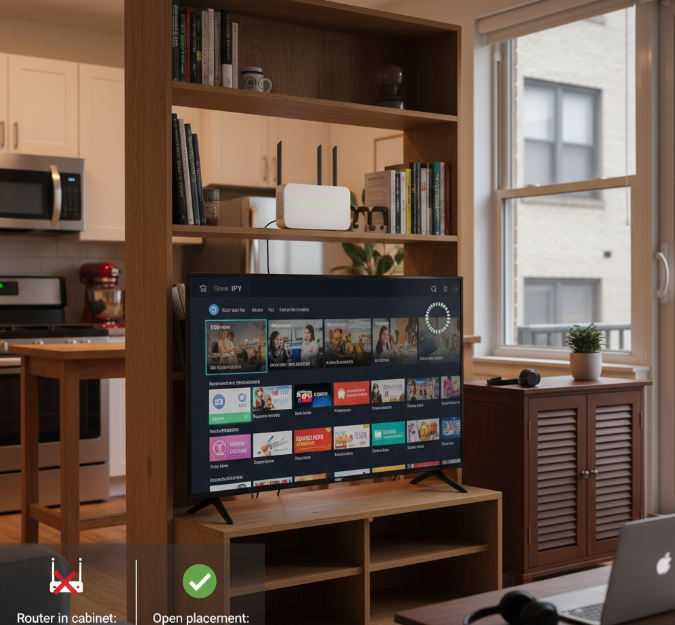
Router placement decides device connectivity
Crowded wireless channels trigger IPTV buffering
What usually works
Place the router higher, not hidden.
Lock wireless channels instead of auto.
Test one device at a time.
| Scenario | Wi-Fi signal | IPTV buffering | Device connectivity |
|---|---|---|---|
| Router in cabinet | Weak | Frequent | Unstable |
| Open placement | Strong | Rare | Stable |
| Crowded channels | Medium | Random | Inconsistent |
Cafe Networks and Bandwidth Throttling
Public Wi-Fi sounds fine until lunchtime hits. Shared connection plus bandwidth limits often cause network congestion, rising latency, and uneven streaming performance. Internet speed may look “fast” on paper, yet QoS policies silently throttle video traffic.
What to test
Peak-hour behavior
Stream startup delay
Bitrate drops under load
A StarIptv network engineer once said:
“Cafes don’t break IPTV—shared connections do.”
Short tests during quiet hours don’t tell the truth. Busy hours do.

Office VLANs with SNMP Monitoring
VLAN configuration separates IPTV from business traffic.
Network segmentation protects IT infrastructure.
SNMP monitoring shows real network performance.
QoS settings prevent video traffic fights.
How teams usually test
Enable traffic analysis on switches.
Watch packet flow during meetings.
Adjust QoS settings live.
In an enterprise network, IPTV behaves well when rules are clear. Clean VLANs plus SNMP data remove guesswork and keep IT teams calm.
Is Your IPTV Channel Testing Secure and Legal?
The main risks wholesale buyers worry about
Content piracy: Test playlists pulled from shady Telegram groups or random forums.
Copyright infringement: Using premium sports or movie feeds for demos without proper licensing agreements.
Data privacy: Logging IPs, viewing habits, and device info without clear policies or consent.
Terms of service violations: Ignoring platform rules from upstream providers, CDNs, or ISPs.
Weak iptv security: Exposed management ports, default passwords, and open streams that anyone can scrape. (doverunner.com)
Each of these can turn a promising trial into a “yeah, legal said no” moment.
Quick playbook: ethical testing that doesn’t blow up later
Use clean, licensed sources for demos
Build test playlists only from feeds you control or from partners with written licensing agreements.
Label each test stream with its origin, rights status, and allowed usage in your internal docs.
Write a basic ethical testing policy
Spell out what your team can and cannot do when hunting for sample channels.
Explicitly ban content piracy and “just for testing” excuses that ignore copyright infringement.
Align your internal rules with the terms of service from upstream providers.
Lock down access to test environments
Restrict XBMC test setups to specific IP ranges or VPN usage you control.
Protect admin pages on your Headend, Encoder, and Decoder gear with strong auth.
Keep logs, but treat them with data privacy in mind: minimize personal identifiers and set retention limits.
Share a short legal compliance checklist with buyers
Show that you think about digital rights management, licensing agreements, and data privacy. (arxiv.org)
Make it easy for a corporate lawyer to say, “This testing approach looks responsible.”
Risk view for wholesale IPTV testing
| Risk Area | Typical Slip-Up | What To Check | Who Cares Most |
|---|---|---|---|
| Content rights | Using premium sports channels grabbed from pirate feeds | Licensing agreements, usage scope | Legal, procurement, brand protection |
| Data privacy | Logging user IPs and MACs with no clear purpose | Data privacy policy, log retention | Compliance, security, DPO or privacy lead |
| Platform rules | Ignoring CDN or ISP terms of service | ToS alignment, fair-use limits | ISP/CDN partners, legal |
| iptv security | Open management ports, test URLs shared publicly | Firewall rules, access control, VPN usage | Security teams, CTO, big enterprise buyers |
Drop a table like this into your internal wiki and keep it updated. Buyers love seeing you treat risk in a structured, grown-up way.
How StarIptv talks about testing with big customers
Q: What’s the fastest way to kill a deal with a large hotel chain?
A (StarIptv): “Honestly, it’s content piracy. If their legal team sees unlicensed sports or movies in a ‘test’ playlist, we’re done. We only demo with assets covered by our licensing agreements.”
Q: How do you explain vpn usage during testing to buyers?
A (StarIptv): “We use VPN only for secure remote access to our own lab, not to bypass geo-blocks. That’s part of our ethical testing promise, and we state it openly in the proposal.”
Q: What’s your baseline for data privacy during trials?
A (StarIptv): “Logs focus on QoS and QoE metrics like Bitrate and Buffer Ratio. We avoid personal data where possible. If we must store IPs for troubleshooting, we define clear retention and access rules.”
These kinds of answers show that the company thinks beyond pretty video and treats iptv security and legal compliance as selling points, not just legal homework.
Simple habits that make your XBMC tests look professional
Label every test playlist:
Add tags like “Demo – Hotel rights OK” or “Lab only – no external use” into file names or internal docs.Document what licenses actually cover:
Make a one-pager per content partner: allowed territories, devices, and testing conditions. Tie that directly into the XBMC test plan so staff don’t improvise.Teach your engineers to spot red flags:
A stream that changes URL every day, requires odd scripts, or comes from unknown domains is probably bad news. Train staff to walk away instead of forcing it into a demo.Bake ethical testing into sales decks:
Add one slide about ethical testing, terms of service alignment, and digital rights management posture. That slide often calms nervous stakeholders on the buyer side.
Quick red-flag checklist before sharing a test playlist with a buyer
Source has no clear owner or licensing trail.
You’d be embarrassed to show the URL or origin to a lawyer.
Stream appears identical to a major broadcaster’s feed with no contract in place.
To make it work, someone suggests using VPN usage tricks to bypass regional locks.
If any line makes you uneasy, scrap that feed and pick something clean.
Conclusion
Running IPTV checks on XBMC isn’t rocket science, but it is easy to get burned without a plan. This guide walked through how to spot buffering trouble, prep the network, and validate real channels in real conditions. Think of it like a test drive before buying a truck—you want hills, traffic, and bad roads, not an empty parking lot. By using a structured iptv test process, wholesale buyers can stop guessing, cut down on ugly surprises, and walk into vendor talks with facts instead of faith.
Turn XBMC testing into a repeatable in-house routine, not a one-off demo
Use mixed channel samples: live sports, VOD, high-bitrate feeds
Set clear pass/fail targets for jitter, latency, and packet loss
Test across home, venue, and office networks to avoid blind spots
Keep security and licensing checks part of every trial
At the end of the day, solid testing saves money, saves face, and saves late-night support calls. Do the homework upfront, and the IPTV business gets a whole lot calmer.
References
Kodi Wiki – PVR IPTV Simple Client - https://kodi.wiki/view/Add-on%3APVR_IPTV_Simple_Client (kodi.wiki)
TP-Link – Configure IGMP Snooping for IPTV Networks - https://www.tp-link.com/sg/support/faq/2223/ (tp-link.com)
Mux – HLS vs. DASH: What's the Difference Between the Video Streaming Protocols? - https://www.mux.com/articles/hls-vs-dash-what-s-the-difference-between-the-video-streaming-protocols (mux.com)
Cloudflare – What is MPEG-DASH? | HLS vs. DASH - https://www.cloudflare.com/learning/video/what-is-mpeg-dash/ (cloudflare.com)
Cloudinary – What is MPEG-DASH and MPEG-DASH vs. HLS - https://cloudinary.com/guides/video-formats/what-is-mpeg-dash-and-mpeg-dash-vs-hls (cloudinary.com)
Wikipedia – Mean opinion score - https://en.wikipedia.org/wiki/Mean_opinion_score (en.wikipedia.org)
Doverunner – Internet Protocol Television – IPTV Meaning & Security Guide - https://doverunner.com/blogs/what-is-iptv-and-how-it-works/ (doverunner.com)
arXiv – The Future of IPTV: Security, AI Integration, 5G, and Next-Gen Streaming - https://arxiv.org/html/2503.13450v2 (arxiv.org)
FAQ
How do I know my IPTV test playlist is ready for XBMC?
Check that every M3U link opens through HTTP, RTSP, or UDP
Make sure codecs like H.264 or HEVC match your Set-top Box
Play both Multicast and Unicast streams to watch Jitter and Packet Loss
Flag QoS or QoE issues before showing the list to clients
Why does my IPTV channel buffer during testing on XBMC?
Buffering usually comes from Jitter, Latency, or Packet Loss between the Router, Network Switch, and Encoder. Limited bandwidth or Bandwidth Throttling can also push HLS or DASH streams to stall.
Which metrics matter most in an iptv test for wholesale buyers?
Network stats: Jitter, Latency, Packet Loss, Burst Loss
Video stats: Bitrate, Frame Rate, codec type
User view: QoS, QoE, MOS, Buffer Ratio
Hardware load on Set-top Box and Headend Encoder
How should I pick codecs for IPTV testing on XBMC?
H.264 works on almost everything, making it safe for demos. HEVC, AV1, or VVC cut bandwidth but need stronger Decoders and newer Set-top Boxes, so test both paths before rollout.
How do I set up the network for a large venue IPTV test?
Turn on IGMP snooping across Network Switches
Separate IPTV traffic from guest Wi-Fi
Track Network Congestion with SNMP
Confirm Router, OLT, and DSLAM capacity at peak Bitrate
Is it safe and legal to load any IPTV test playlist into XBMC?
Stick with licensed Headend feeds and trusted sources. Random Peer-to-Peer or public M3U lists can bring legal risk, bad streams, or security trouble that scares off serious buyers.
How should I run an iptv test at home, in a café, and in an office?
Home setups suffer from Wi-Fi Signal Interference
Cafés often hit Bandwidth Throttling during busy hours
Offices rely on VLAN rules and SNMP monitoring
Log Packet Loss and Buffer Ratio in each case
How often should I repeat IPTV testing on XBMC?
Run tests after Headend updates, new channels, or network changes. Regular iptv test cycles keep QoE and MOS steady before customers notice drops during live viewing.
What should I check first when an IPTV test channel shows a black screen?
Test the stream outside XBMC using RTSP or HTTP
Confirm Decoder support for HEVC or AV1
Watch for Packet Reordering or Burst Loss
Double-check audio and EPG mappings
How can XBMC test results help IPTV procurement decisions?
XBMC results show Bitrate stability, zapping speed, and MOS scores. That data helps compare providers and see how streams stress Routers, Network Switches, and Set-top Boxes in real use.